Celebrating 600 Episodes of The Brainy Business
Melina Palmer: Welcome to episode 600 of The Brainy Business. Understanding the Psychology of why People Buy. In today’s episode, I’m excited to introduce you to Cass Sunstein, author of many, many books, including The Price of Happiness. Ready? Let’s get started. You are listening to The Brainy Business
Announcer: podcast where we dig into the psychology of why people buy and help you incorporate behavioral economics into your business. It more brain friendly. Now here’s your host, Melina Palmer.
Melina Palmer: Hello. Hello everyone. My name is Melina Palmer and I want to welcome you to The Brainy Business podcast. Oh my goodness. Can you believe 600 episodes of The Brainy Business? I am so absolutely honored and blessed to have been able to do this show for more than eight years. Now. We are well past one and a half million downloads almost to one point, but I’m gonna wait to update it officially again until I can say millions of downloads, which is a reframe I’ve been excited about for quite some time. It’s wild to see how this just keeps on growing and reaching more people around the world. We still have consistent downloads across more than 170 countries. And all of these 600 and counting episodes continue to get listens even years later. Whether this is your first time tuning in or you’ve been listening since the beginning or anything in between, thank you. It means the world to me. I’m so, so thankful for you. There wouldn’t be a show without you. So if there’s ever anything you want to hear about or potential guests you think should be on my radar, please let me know. You can share them on social media or send an email through the contact page on thebrainybusiness.com Speaking of amazing guests, I always like to find someone who’s an extra wow factor when I look at these milestone episodes. So all my guests are fantastic, of course, but there are those ones that get me extra starstruck and often I have to pitch them. Feels a bit scary. I am human, after all. So these milestone moments are a good time to push myself out of my own comfort zone and do that. And so today I’m so excited to be joined by the one and only Cass Sunstein. Cass is a legend in behavioral science, so there’s a good chance you’ve heard his name. He is the Robert Walmsley University Professor at Harvard. He’s founder and director of the Program on Behavioral Economics and Public Policy at Harvard Law School. In 2018, he received the Holberg Prize from the government of Norway, sometimes described as the equivalent of the Nobel Prize for Law and the humanities.
Introducing Cass Sunstein and His Work
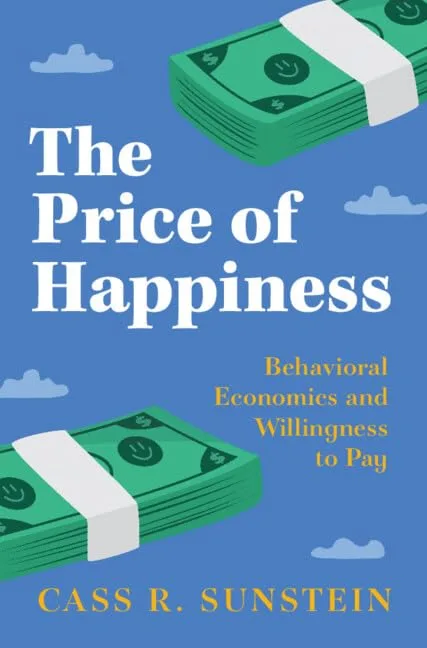
Melina Palmer: His co-author on Nudge, Richard Thaler, also won the Nobel Prize for his work in behavioral economics. From 2009 to 2012, Cass was administrator of the White House Office of Information and Regulatory Affairs, and after that, he served on the President’s Review Board on Intelligence and Communications Technologies and on the Pentagon’s Defense Innovation Board. In 2020, the World Health Organization appointed him as chair of its Technical Advisory Group on Behavioral Insights and Sciences for Health. Cass is the author of hundreds of articles and dozens of books, including Nudge, Simpler The Ethics of Influence, Look Again, which was the topic of the last time I was lucky enough to have him join me here on The Brainy Business and his newest, The Price of Happiness, which, you know, got me excited the moment I saw that title. Cass is a wonderful human. I’m so honored to have him here with me again on the show to celebrate episode 600. As you listen today, consider what you value, how you value it, and what makes you and your customers happy. Really quickly, before we get into the conversation, I want to be sure you know there are links in the show notes for my top related past episodes and books, ways to get in touch, and more. It’s all within the app you’re listening to and at thebrainybusiness.com. 600. Now let’s jump right in. Cass Sunstein, welcome back to The Brainy Business podcast.
Cass Sunstein: It is a great pleasure to be here. Thank you.
Melina Palmer: Oh, yes.
Finding Joy in Writing and Choosing Projects
Melina Palmer: I’m so, so excited. Any excuse, you know, I’d have you come chat with me all the time if I could, but. So, as I mentioned to you before, and I know that, you know, most everyone listening probably already knows who you are, but, for everyone who does not yet know you, can you share a bit about yourself and the work that you do?
Cass Sunstein: Yes. Cass Sunstein remains the name. And I work on, behavioral economics. I’m a law professor. I teach at Harvard Law School. I’ve worked in the government, the US Government in various stints and applying behavioral principles to company behavior. Government behavior. Ordinary life is outside of my dogs.
Melina Palmer: About my favorite thing, which, your dogs made a couple of appearances in the new book. and now I’m having a. Is it Finley and Snow? Was that.
Cass Sunstein: Absolutely. You’re an excellent memory for canine names.
Melina Palmer: I mean, you know, they’re great ones. So, glad. Always good to see, you know, dogs in the mix. I’m a dog person myself. and so, yeah, you mentioned, you know, a bit of the work that you do. Of course, it’s Very extensive and I am always amazed. I’m of. Of course follow you as an in all areas. But on Amazon I get notifications of hey, Cass Sunstein has a new book coming out and pretty sure I get notifications on you having a new book coming out more than anyone else. Do you have, you know, advice for people that are looking to write and like, how do you decide what is like a book worthy topic versus papers? And because I know, I mean, so prolific in your writing, I’m curious.
Cass Sunstein: I guess the advice is if you really like what you’re working on, chances are you’ll make progress in a relatively short time. If it’s a struggle or painful, maybe that’s a sign to put it aside or give up to just put your fingers on the laptop.
Productive Procrastination and Creative Momentum
Cass Sunstein: I have a laptop here, of course. And then, see if something emerges, to have fun with it is very important. when I have multiple projects going at any time, once in a while something gets stuck and then I might abandon it. once in a while something gets very energizing for me and then I will just focus, focus, focus, and it won’t be painful. It’ll be a little bit like my equivalent going to a party. It’ll be really fun even though there aren’t that many people there. So if it’s fun and you’re really enjoying it, then, that’s. That’s where you want to be. I saw a podcast recently with Dolly Parton, who was completely amazing, and she said writing songs is what she likes best. She likes that even better than performing. And I completely identified with her. And she’s of course, unfathomably prolific. And none of us can hope to be Dolly Parton, but at least she has a, an attitude toward writing, which I found, familiar.
Melina Palmer: Oh yeah. And I think, you know, just as a good soul, which I think we see in you as well, with the, cases and things that you’re interested in and helping, even those who can’t represent themselves, like animals and things along those lines and children and whatnot. And so yes, Dolly, amazing, human for sure. I love the. Some of what you were just saying there about the multiple projects. It’s kind of like if we, you know, think about this behaviorally, as we always like to do, it’s the, like using that bikeshedding, productive procrastination tendency to your advantage when you have multiple projects you can be working on. Right. So if you start getting distracted by something else, you’re working on, you can like jump in and work on that one for a little while and put, put this other one aside. maybe as long as you’re not under a really, stringent deadline, that’s great.
Cass Sunstein: And distraction of that kind can be your friend. If you’re distracted by, you know, some tennis match that you wouldn’t enjoy seeing particularly, but it’s on. That’s not your friend. But if there’s something else you’re really excited about, maybe something deep in you is telling you, work on that, not on that.
Melina Palmer: Yeah, yeah. so the new book, The Price of Happiness, we have here now. And so when this one came across, like I said, I see your name come up on my Amazon, I think, oh, that super interesting, great book might not be, you know, fit for the show. And then this one, I said, oh, no question, I think I emailed you that, you know, the day it came out.
Why Cass Wrote The Price of Happiness
Melina Palmer: Please come to me on the show and thank you for doing so. So what got you interested in talking about this pricing angle and knowing also the way that you’re talking about pricing is very, very different than what people are used to hearing how I talk about pricing on the show. So that background would be useful as well.
Cass Sunstein: Okay, so the basic motivation is that, people in life make their decisions based on their willingness to pay. And it’s a mildly abstruse term, but it’s a very familiar act. So how much are you willing to pay for the, the new iPhone duo? I think it costs about $2,000. I would pay 300. I’m not willing to pay 2,000. How much would you pay for a new book by Richard Thaler on behavioral economics? For me, a lot. For some people, zero. How much would you pay? I just got a new car. How much would you, are you willing to pay? It’s really everywhere. And willingness to pay is in some ways what makes people’s world go round. It’s also a magnificent human achievement that have willingness to pay in our daily lives that if you’re not willing to pay $40 for a meal, then you go to another restaurant where maybe you can get a meal for $8. That’s great. And if you have plenty of money or if you love expensive food, then go for it. And this is basically everything. And I have ah, a lot of enthusiasm for willingness to pay as a foundation both for human freedom and for human well being. So this is in a way a love song to willingness to pay. But there’s also a bunch of problems where people might be willing to pay a lot of money, let’s say for membership in a gym that over the course of a year they go to exactly four times, they’re making a kind of mistake. Or they might not be willing to pay much for something.
When Willingness to Pay Gets It Wrong
Cass Sunstein: It might be health care or it might be something that they really find fun like a tennis lesson. And they might not willing to pay anything but might turn their lives around. So the behavioral side is an emphasis on when exactly does our willingness to pay misfire? We pay too much, we pay too little. And then given my government background, I saw in the White House even willingness to pay being the foundation for government, government policy, where when you’re thinking what kind of regulations do you impose on automobiles to make them safer, it’s not infinite because then people can’t buy cars at all. It might not be a penny because if you’re going to put something significant in a car, it’s going to cost more than a penny. How much is it? And willingness to pay tends to be the general measure how much people are willing to pay. And that’s for risk reduction with have some numbers there and that’s foundational. But for children it doesn’t really work very well because if you ask my 14 year old daughter how much she’s willing to pay for things, she will say nothing. And the reason is she really doesn’t have any money unless we give it to her. And that makes the problem of people who don’t have money, including kids, kind of tough. Knock not to crack. So that’s part of the motivation of the book. Also I’ve been very focused on social media and data suggesting that people are being made often, not always of course, but often, more anxious and a little more depressed by using social media and yet they pay with their time for it.
Willingness to Pay, Willingness to Accept, and Ownership
Cass Sunstein: Think about that. So that’s the universe of problems that got the got the fingers going on the laptop.
Melina Palmer: Yeah. And so I, you know, the social media piece comes up of course at the very end of the book, but where you just brought it up here, you know, so we’ve got some of the, you know, terms or you know, acronyms in there. So WTP for willingness to pay. We also have WTA which we’ll have you talk about and then WTG which is a fun new one. So can you share a little bit about those? Obviously we talked about willingness to pay,
Cass Sunstein: but yeah, okay, so you might be willing to pay for a lottery ticket, a certain amount of money once you have the lottery Ticket you might be willing to accept only a really high amount. So we have data suggesting that. I’m going to make up some numbers. People pay $5 for a lottery ticket once they have it, they’d have to be paid maybe $15 to get rid of that for any goods. I’m looking for a copy. Mug. Yes, I have a mug. It’s a little broken here. that wasn’t an act of political act. This is my Department of Homeland Security mug, which I got when I left government. It got broken just by regrettable accident. I would pay an amount for another one of these. If you want to buy this from me, you’re going to have to pay me a lot. So willingness to accept is, and I’m just noticing this on myself, this is random. But to, sell this admittedly broken Homeland Security mug, people would have to pay me, I don’t know, $100, $200. But the willingness to pay people probably aren’t going to pay that much for the mug. They meant that you have to pay me even more than that. Sentimental.
Melina Palmer: I was actually surprised where you said that you would buy another one to replace it, but it wouldn’t be the same. Same one, Right. It’s not the one you got when you left. It’s not. It wouldn’t be the same completely.
Cass Sunstein: Completely. So. So willingness to accept is typically a lot higher than willingness to pay or at least frequently for goods that aren’t like, money tokens. That’s a puzzle.
Wasting Time Goods and the Cost of Social Media
Cass Sunstein: And which one the government should use is something the government’s very confounded by. Which one we should use in thinking about the value of goods isn’t self evident. It’s super interesting why there’s a disparity. And when the disparity is particularly significant, high. So those are, part of the focus of the book. Then you refer to wasting time goods. Wtgs. That’s my own term. The other two are familiar. Okay. So the basic phenomenon is that some goods are wasting time goods. Wtgs, that is goods that people what use, pay for, pay their time with, but they know on reflection that they’re wasting their time. We have data suggesting that people won’t pay anything. A lot of people for social media use. And part of the explanation is they think they’re just wasting their time. And why should they devote their hard earned money to something that isn’t doing them much good? It’s just kind of making the time pass. for me, I confess, since we now know each other pretty well, I Will watch old boxing matches on YouTube, preferably featuring Muhammad Ali, hero of mine. And while I guess I enjoy them, I must, I’m kind of wasting my time. And I’m, acutely aware of that. And I wouldn’t be willing to pay anything for that. And pervasively, in markets there’s a subset of goods that people pay real money for or pay time, to devote to. And those are things that are wasting time goods. And this is, you know, it’s not the number one problem humanity faces. But since time is limited for all of us, we don’t have infinite time. it is a problem.
Melina Palmer: M. Well, and it was really interesting too in that aspect of like where you had, you know, there were tests of people where they get rid of it for a month, you know, and it’s like you’re having to be paid and think it was, you know, $86 to not use it for a month. And then people reported being like, I was happier and less distracted. And it’s kind of this great space, but then they don’t want to then keep not using it unless everyone else is out of it too.
Cass Sunstein: There’s some pretty dramatic findings here where if you ask people how much they’d have to be paid to be off, they’ll say a significant amount. A big subset of the population will say roughly $100 in that vicinity. Then if you take half of that population and say, okay, deal, you’re off, here’s your money. they are more satisfied with their lives, they’re less anxious, they’re happier. Along every measure of well being, they’re doing a bit better. And then, as you say, if you ask them how much would you have to be paid to be off another month, they’ll say almost as much as they said the first time. Whereas you would expect their answer to be, you don’t have to pay me anything. I’m staying off. I had a great month. Life is better this way. But they demand a fair bit, and that may be because they think I don’t want to be off if everyone else is on. And I can’t bear the idea of my being the only one in my group or one of a small set of people in a group who’s not part of the group. And so we have data suggesting that young people would like to be off TikTok and Instagram, at least a lot of them, if and only if other young people were off TikTok or Instagram, so long as everyone else is on, they want to Stay on. Now this is an important subclass of goods. I call them Barbies. That’s because I’m not a great fan of the toy Barbie, though I did love the movie Barbie.
Social Pressure, FOMO, and Network Effects
Cass Sunstein: And having raised two daughters, one of whom still raising the other of whom who’s grown up, who spent a little time with Barbies, I’m thinking that at least some part of the Barbie owning population thinks oh my gosh, I wish we didn’t have Barbies. But we kind of do. And so I’m going to have one too because others do. And so this is a challenge in markets. It’s also an opportunity for companies to market something as something which other people have where people will get it not because they will enjoy it, but because they don’t want to be excluded from a network.
Melina Palmer: Yeah. The, the FOMO of it is too much. Right. That we complete that, that herding, social proof life. We, we need to be in there.
Cass Sunstein: Yeah. And I, I find this really fun, this topic of goods that people enjoy in a sense at least use but which did not exist. So you can think of it as maybe there’s a party on Saturday night. If there’s a party you’re gonna go. But maybe if the party were canceled you’d say I kind of like the fact that it was canceled. And this is probably true of a large number of things. When I was in the US government we had meetings for some of my offices, get togethers that were half an hour meetings and I cut them all to 15 minute meetings. And I believe though maybe this is self, serving that people really like that, that the half hour was just excessive. And once it was cut to 15 minutes. You can get your work done in 15 minutes.
Melina Palmer: Yeah, you fit the work to the size of the time. Right. In those laws of triviality for sure. That’s you know, having little kids. Right. So my, I have a five year old and and up to 13. So kind of have at least one that’s at the similar age as your daughter. but it’s amazing like in the, whether we get up early or we’re up five minutes before we have to get out the door, like we’re always getting out at the same time, you know.
Cass Sunstein: Right.
How Free Markets Reflect Different Preferences
Cass Sunstein: Yeah, completely. It’s relevant to meetings and scarcity so that if you, you have scarcity of time and if you have specific scarcity like you have to be out in 10 minutes, then people often will find a way if they have an hour then they’ll Fill up the hour for markets. The fact that we have many goods that people really love and they love them independently of whether other people were enjoying them. It might be the it’s a book that you love. A book, maybe a book about behavioral economics and even if other people aren’t reading it, you’re going to like it. Maybe it’s Shakespeare. Even better than a book about behavioral economics. The number of people are using it isn’t important to your own expenditure. Ah. Or enjoyment.
Melina Palmer: Yeah, no, it’s, it’s really interesting. And you think about the models for the companies obviously. So there’s a reason that all those social apps are still free for the most part. Right. And you can pay to get rid of ads on things like YouTube and get some sort of premium benefits, but you know, if they started to charge for them, a massive amount of people just wouldn’t be there anymore. And so that willingness to pay can shift.
Why Willingness to Pay Varies Across People
Melina Palmer: You of course talk a lot in the book about the variability of willingness to pay. Right. And how things, it’s not just like a set number and it’s not something that’s the same for everyone in every circumstance. if you, do you want to dig in a little bit more about kind of the complexity of the, of the topic and whether you put that into a business context or like you said, a government context. I already told you, anything you want to talk about is fair game for me.
Cass Sunstein: Great. So, someone who ended up being a hero of the book, I didn’t expect this is an economist named Friedrich Hayek who was a theorist really of ignorance. He wasn’t fundamentally, I don’t think a theorist a markets though. That’s what he got the Nobel Prize kind of for. he was a big fan of free markets. But Hayek is the apostle of ignorance. And the basic idea is the price system is a marvel. He described it with almost rapture because it aggregates the knowledge and beliefs of so many people. So a planner, even if the planner is really well motivated and super knowledgeable, just won’t know know everything a market knows with that dispersed knowledge. Now to your point, it may be that someone is willing to pay a lot for apples because that person just really loves apples and has some money. And then there are others who are paying to, willing to pay zero for apples. There’s so much heterogeneity out there with respect to risks. It’s the same with some people will ride a motorcycle or get a car without a lot of safety equipment. Because they think a risk of 1 over x. I can handle that either because X is a pretty big number and I’m not in danger, or because I’m just a really good driver. And there are other people who think, well, peace of mind is super important to me and I’m going to get every safety thing I can. And that’s how I want to spend my money. So what we’re seeing here is how m Many resources you have, how much money you have is fundamental to your willingness to pay, of course. And that turns out to be very important for policy, as well as for just looking around. And it also bears on reform efforts. But also, and I think this is more fun that values and tastes preferences are so different. And free societies, not only notice that they celebrate that and they say if people really love, spinach, then go for it. And the price of spinach is going to jump. And that’s okay because if you didn’t allow it to jump, then we’d have spinach scarcity. Because so many people love spinach. If people are just so enthusiastic about going to tennis matches, then that those people go to the tennis matches and they’re willing to pay a lot. And this is basically fundamental. I mean, it’s central to freedom and to human well being. Where those of us like me who don’t like opera were probably a character failure. I don’t go to opera and I’m willing to pay nothing. And there we go.
Fairness, Wealth, and Access to Essential Protections
Cass Sunstein: And then someone who I dated a few years ago just loves opera, loved it, she’s a good friend, and she’s willing to pay a lot. And this is how human well being often jumps in the best way. And it’s also how freedom, flourishes.
Melina Palmer: M. Yeah. And that being said though, you know, you also have a lot of sections in the book about, you know, those who are, you know, poor or otherwise don’t have as much as, you know, there’s a 1% and a 0.1%. And like, the disparity is so vast in, especially in America, these days. And so, you know, very quickly it could be that, you know, almost most people can’t afford nearly anything because there’s a small percentage of people that are driving up the price on all things. we have some, we’ve already talked about Dolly Parton. We of course have Taylor Swift, you know, unwilling to sell tickets of, you know, eras tour, over a certain amount, even though we know she could have sold those for much, much more to make it so that her fans are able to attend. you know, what are your thoughts about. You know, it’s not that someone’s unwilling to pay for. For. You know, I love the examples you’re giving about things like clean drinking water or other aspects of safety. It’s not that I wouldn’t pay for it if I had the money for it, but I also need to eat food or, you know, I need to have warm, clothes for the kids or whatever that happens to be. And so that kind of adds this dynamic layer of complexity that makes all these things so much more difficult than just kind of black and white answers.
Cass Sunstein: Okay, let’s go at this, shall we? From Washington, D.C. yeah. And this is discussions I was part of, where you have communities that are asking for federal grants because of flood risks and other risks, and they have really high property values. So it’s a rich place. They have a claim to protection that is commensurate with the value of their property, which is really high. Then there’s another community in a very poor area, where the property values are very low and the claim for protection they have on standard analysis is weak because their property isn’t worth very much because it’s a poor community. People in my neck of the government woods see my Department of Homeland Security cup. This is all in the department. some said that’s wrong because people in poor communities, they care if they get flooded. It’s a horrible thing for them, even though their property isn’t worth a whole lot. People in wealthier communities, of course they care, but they’ve got a lot of money, they can handle it. And so we shouldn’t allocate our resources to protect people in the wealthy communities and neglect people. People in the poor communities. And that. I think that was a convincing argument. If we’re saying that only rich people can go to Taylor Swift concerts because the tickets are very expensive, because the demand is very high, I think Ms. Swift herself would say that’s unfair. There are plenty of people who like my songs, as much as anyone in the world and who would be a fantastic moment for them. She would say, I’m sure with humility, to be able to go to my concert, but they can’t afford it. That’s a problem. And I think there’s something profound in that example. And now you’re. Thank you for showing one of the critiques of willingness to pay. That willingness to pay depends on ability to pay. So it’s a helpful but inadequate measure.
Why Ability to Pay Is Not the Same as Value
Cass Sunstein: I’ve been celebrating it of the welfare benefits, well being benefits or of the freedom promoting qualities. If you don’t have money so you can’t get access to something that could make your year much better, it’s not right to say you’re freer because we rely on willingness to pay. It, would be to say there’s a lack of freedom, that you don’t have money so you can’t enjoy whatever. And it’s not as if you wouldn’t enjoy an increase in your well being from healthcare or a good restaurant meal or protection against flood damage or access to, Taylor Swift or my current hero Olivia Rodrigo, or you know, a tennis match. You might love, love those things. So what are we going to do about. That is a very nice question. What the Department of Homeland Security tried to do, was to give some extra weight to people in poor communities who are trying to get protection against flood damage. Saying that the extra weight is not, you know, a matter of generosity or largesse. The extra weight is because they would really suffer if they get flooded even though the property that they have isn’t worth a ton.
Melina Palmer: M. Yeah. And all the dynamics at play are really important to be able to consider and think that all through. So as someone is listening now and they’re thinking, you know, so what can I do with this? What should I do? So, you know, one of course being the business perspective, like how does this apply to people from, you know, that working side, but also just as, you know, citizens, what would you like people to do as a result of this conversation?
Better Consumer Decisions and Fairer Pricing Strategies
Melina Palmer: And of course, when they pick up their copy of The Price of Happiness.
Cass Sunstein: Okay, great. So I think in for us as individuals, I try to do this to think that sometimes I might not get things that really would be good to get because I’m focusing on the short term, that’s present bias. So I might not be thinking this will have long term benefits. So to try to be alert to my own biases and judgment when I buy. Or I might be unrealistically optimistic and not think this might break or something might go sour, but it’s worth getting maybe a slightly more expensive thing or something that is, less vulnerable. I tend to be, since doing this book, much more upbeat when I rent a car on getting extra insurance. And the reason I am is even though it’s probably not in terms of strictly economic judgment, the right thing to do. It gives peace, of mind. And if things go really sour, which is probably slightly more probable than I would expect, you know, some, what’s the word. Shit happens. Is that the term? Then I won’t suffer a significant loss. So to counteract one’s own focus, on the short term, to focus on one’s own unrealistic optimism, probably good things in consumer choices for businesses, you can do a lot to come to terms with the limitations of willingness to pay. So to have, personalized pricing, if it’s feasible, where poor people maybe don’t have to pay as much as people who aren’t poor, you might have proxies for poverty and wealth. Like maybe people who buy at certain times are likely to have plenty of money. And while personalized pricing is taking it on the chin a little bit in newspapers, these days, it has a certain fairness to it. If someone who has a good income is willing to pay a lot for an air ticket and someone who doesn’t is willing to pay less, and the airline, does just as well or better if it adjusts discounts, for people who don’t have much money, that can be good for business because you get a loyal set of, users or consumers. And it can also be the right thing to do. So recognizing that people who don’t have enough money to buy certain products would benefit massively from them and think, what can we do to give them a chance? It might not be free. Right. That’s not very good for business. but it could be, you know, 10% off or, some community is going to have access to a good, that can be, you know, something that for a company can be a fantastic way of building loyalty and also making people feel really great looking themselves in the mirror at night.
Melina Palmer: Yeah. And, you know, ways to think about the, as you were talking, I was thinking about where sometimes like a clothing item that’s in a different color or the last season, like those can be less expensive because there aren’t as many people buying them, but the company made them. And so it’s better for them if someone buys them for something. But, you know, if it’s so last season and those who could have afforded it don’t want it anymore in that way. But then people are able to get it, it’s just a little bit later on and they can get it at a discount or something could be an option or the. Some of those things where it’s these like, you know, ugly fruits and vegetables that are being sold for, for less or, or things along those lines. Finding a way that there’s kind of that win, win, win, I think is always a, big Goal that something I look for for sure.
Cass Sunstein: Completely. I just bought a car like four days ago.
Melina Palmer: Yeah.
Cass Sunstein: And I was wearing I think exactly this coat when I bought this jacket. That’s a suit. And probably they thought I’m not desperately poor, which please to say is true. And if they charged me a little bit more at this very nice, Toyota dealership than they would have had, they had someone who looked like they were really struggling, I think that’s just great. And it might be a little cross subsidization where the, you know, the person who has a suit is paying a few hundred dollars more and the person who is looks like they really struggle is paying a few hundred dollars less. I think the company should feel very good about that. That’s a form of personalized pricing that increases overall, well being interesting.
Melina Palmer: Good for people to be thinking about the opportunity. Like if you think about that as a gift to the next person, that can be a way to making everything a little bit brighter around us. Right?
Cass Sunstein: Yeah.
The Ethics of Pricing and Cass’s Work on Animal Welfare
Cass Sunstein: Recognizing that willingness to pay is dependent on ability to pay. And that is in many ways a great thing. You don’t want to force people who don’t have a lot of money to buy a very expensive car. They have other things to spend money on. But to give people a little economic help, they knowing that willingness to pay is in some cases not an adequate measure of how much the good’s going to help them. That’s actually businesses can and often do do exactly that.
Melina Palmer: Hm. Yeah, for sure. So as we are going, to close out our conversation here, which always makes me sad because I know we could talk for a very long time about all things. I’m curious, curious. As you said, you have multiple projects going all the time. What are some of the other things you’re working, on and excited about? What’s got you typing on the laptop these days?
Cass Sunstein: Well, I’m doing a book right now on animals. I love my dogs and I’ve thought a bit about the rights of non human animals. And while that sounds a little out there, if you think about, you know, abuse or cruelty or if you think about provision of food and water and adequate shelter, these are things which I think we very generally agree on, though it’s not consistent with our universal practice. So if we accept a very simple proposition which is animals matter, horses matter, dolphins matter, dogs matter, where we end up going. And that is a little bit of a adventure, I’ve been on for the past 18 months.
Melina Palmer: Oh, interesting. And so does that Have Is that taking up then all of your reading time these days, or. You mentioned that you like reading, of course, books on behavioral economics. Do you have any, books that are on your shelf right now that. That you’re reading?
Cass Sunstein: I have a. Of lot.
What Cass Is Reading and Researching Next
Cass Sunstein: A lot.
Melina Palmer: I’m guessing.
Cass Sunstein: There’s a book coming by Max Bazerman, who’s a business school professor, on conflicts of interest and expert testimony, which I’ve been reading. it’s in draft, but the basic idea is that experts sometimes are, expert but not exactly neutral. And what does the legal system do about that? So m. That’s one of my current reading projects.
Melina Palmer: Interesting. Well, I know everybody can keep an eye out for that for whenever that’s going to be hitting shelves as well. Sounds interesting. So thank you again so much for. For agreeing to come on again to join me on the podcast. It’s always delightful to be able to chat with you. And whenever I see you’re doing a talk, like I said, I was able to come see. See you, at a session in Harvard that was, live earlier this year. I also watched a talk you did for the Global Association of Applied Behavioral Scientists earlier this year that was about sludge that I attended. And so, just a big fan of the work that you’re doing. And thank you. yeah, thanks for all that.
Cass Sunstein: Thank you. Great pleasure.
Melina Palmer: Yeah. and for everybody who does want to follow you, learn more, get the book. I know there’s the usual spots. We’ll put it in the show, notes, you know, things as well. But you know, what’s the best place for everyone who is interested in following you and getting that next book and all those things?
Cass Sunstein: Okay, so The Price of Happiness, our topic today, that’s basically the culmination of 25 years of work. So that kind of, ah, fundamental place in terms of my scribbling, and efforts. the Social Science Research Network is a place where I post my papers. So if you go there and put my name, you’ll see an excessive number of papers. And there’s a new website which is gaining in popularity, has a kind of memorable name. I’m not sure if you’ve heard of it. It’s called Amazon, and there they have books. And I think all of my books are there also other places.
Melina Palmer: We’ll have to look that up. We’ll find it. I think it’s a new novel, so site, but, amazing. Well, thanks again, Cass, for joining me. It was delightful to have you on the show.
Cass Sunstein: That’s great to see. You.
Melina’s Reflections on Curiosity and Productive Work
Cass Sunstein: Thank you.
Melina Palmer: Thank you again to Cass Sunstein for joining me on the show today. What got your brain buzzing in today’s conversation? For me, I’m always amazed at what a prolific writer Cass is. He’s so productive. And to write countless books and articles alongside teaching at Harvard and speaking around the world and working at the White House, it’s awe inspiring. I really like that idea we talked about where you can use your brain’s tactics toward bikeshedding, what I call productive procrastination to your advantage, jumping between projects that interest you. That might mean if one is in a research phase, you take a break from writing one thing and read something else, or to work on an outline for something before popping back to the other work. It’s definitely possible to keep that all in a confused message mess and never make progress on anything if you try to do too many things at once, of course. But there’s a beautiful rhythm to it if you can find the way to make it work for you. And I really love how much he continues to ask questions and find opportunities to shake up the norms of the world. What if things were different? What might we try? And a personal favorite of mine I heard him talk about in another presentation recently. If the fate of the world depended on you in eliminating this sludge, what could make it happen? Or, something to that effect. As he said, they tend to respond with, you know, well, if the world was going to end in 30 days, if we didn’t, I’m sure we could figure it out. So can we just do it now?
Applying the Insights to Business and Everyday Life
Melina Palmer: It’s amazing how a simple reframe like that can nudge people to find opportunities they were sure were impossible just moments before. You can do this for yourself. In asking better questions for you and your teams, maybe it’s in reducing sludge. Maybe it’s to launch a new product or service. Maybe you use that skill as you consider willingness to pay versus willingness to accept and how that’s impacting the way you and your customers value things. And if there’s a disconnect there, maybe you’ll consider all the wasting time goods that are bogging down your life and find opportunities to use them less. It’s amazing how the research found that so many people said they know social media is bad for them and they feel worse when when they use it. And if everyone else was going to leave, they would be happy to do so too. But they won’t be the only ones to go because of that fomo. They’re going to experience herding instincts are so strong with us. I think it’s the same when we look at AI usage and so much more. Are you doing it because it’s helpful or just because everyone else is? You can ask that question about anything, of course. And if you have an answer to that or a thought about anything you heard in today’s episode, or if you
Celebrating the Milestone and Staying Connected
Melina Palmer: just want to help celebrate episode 600 with me, please come share with me on social media. You’re going to find me as the Brainy Biz pretty much everywhere and as Melina Palmer on LinkedIn. And if you feel inclined to say thank you for 600 episodes of the show and the other content I create for free via The Brainy Business, please subscribe if you aren’t already. It really does help both to the podcast by clicking that little button in whatever app you’re listening to this on. Or you can also subscribe to my newsletter by visiting thebrainybusiness.com join. There are links in the show notes to make it easy, as well as links to my top related past episodes and books including The Price of Happiness, Ways to Get in Touch, and more. It’s all waiting for you in the app you’re listening to and at thebrainybusiness.com 600 and thank you again to Cass Sunstein M for joining me on the show today for the 600th episode of The Brainy Business Podcast. It was a delight to chat with and learn from you. Join me next time for another Brainy episode of The Brainy Business Podcast. It’s going to be a lot of fun. You don’t want to miss it. Until then, thanks again for listening and learning with me, and remember to be thoughtful.
Closing and Additional Resources
Announcer: Thank you for listening to The Brainy Business Podcast. Melina offers virtual strategy sessions, workshops and other services to help businesses be more brain friendly. For more free resources, visit thebrainybusiness.com.