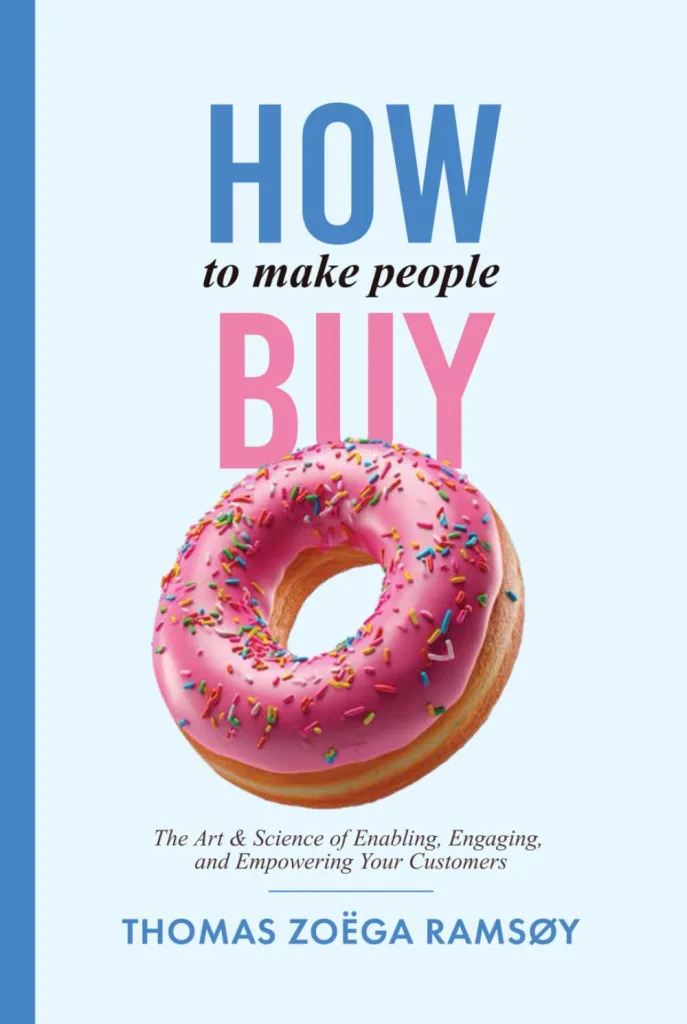
Melina Palmer: Welcome to episode 603 of the Brainy Business Understanding the Psychology of why People Buy. In today’s episode, I’m excited to introduce you to Dr. Thomas Ramsøy, author of How to Make People Buy. Ready? Let’s get started.
Announcer: You are listening to the Brainy Business podcast where we dig into the psychology of why people buy and help you incorporate behavioral economics into your business, making it more brain friendly. Now, here’s your host, Melina Palmer.
Melina Palmer: Hello. Hello everyone.
Melina Palmer: My name is Melina Palmer and I want to welcome you to the Brainy Business Podcast.
Why Great Ads Must Connect Back to the Brand
Melina Palmer: Have you ever watched an ad and absolutely loved it? Maybe it was super funny or moving or it was just beautiful to look at. For some reason it caught your eye enough that you told people about it or had it randomly pop into your head weeks or months later, but no matter how hard you tried, you couldn’t remember the brand that made it. Being memorable is important in advertising, of course, but if people don’t remember it for the right reasons and your brand gets left out of the equation, it can be a massive waste of time, energy and money. My guest today will share some surprising real world examples and also some fascinating research he’s done over the years that can help your brand get attention and be remembered in a way that helps you reach your goals. That guest is Dr. Thomas Ramsøy. He is founder and CEO of Neurons, an applied neuroscience and AI company that helps brands predict how people will respond to ads, packaging and other communications. A former university professor, his research on technology and the brain has been cited more than 6,000 times. He’s authored four best selling books on consumer neuroscience, holds multiple inventions across neuroscience, AI and psychology and continues to collaborate with leading universities worldwide. He also works with Fortune 500 companies and has notable contributions alongside Meta, Google, Estée Lauder, Tesco, Spotify and Visa. his work has been mentioned in Forbes, the New York Times and the Wall Street Journal. As you listen today, I encourage you to consider what do you most want people to notice, feel and remember about your brand really quickly? Before we get into the conversation, I want to be sure you know there are links in the show, notes for my top related past episodes and books, ways to get in touch and more. It’s all in the app you’re listening to and at thebrainybusiness.com/603.
Meet Dr. Thomas Ramsøy: From Neuroscience to Consumer Decisions
Melina Palmer: Now let’s jump right in. Dr. Thomas Ramsøy, welcome to the Brainy Business Podcast.
Dr. Thomas Ramsøy: Hey Melina, thank you so much for having me.
Melina Palmer: Yes, I’m sorry. Super excited to have you here and excited for everyone to hear from you, there’s so much great stuff here. I know. For everyone who does not yet know you, can you share a bit about yourself and the work that you do?
Dr. Thomas Ramsøy: Yeah, I have a kind of a little mixed background. I started studying business, and economics first. I’m a Norwegian so I lived in Norway first, then moved to to Denmark and lived here most of my life. I kept studying and moved over to psychology. I have a neuropsychology background so I’ve worked many years clin and try to understand how the kind of the human mind works just in general how it’s getting broken. ended up doing a PhD and using fMRI and these kind of imaging technologies and studying the conscious versus unconscious mind and then got an invite to start a multidisciplinary research lab at the Copenhagen University Hospital and the business school to study decision making, conscious and unconscious decision making. That was how everything started in 2008 for me. so I was really kind of nerdy.
Building Neurons and Bringing Research Into the Real World
Dr. Thomas Ramsøy: Did all the studies on what happens in the brain when we’re getting conscious and things like that. Ended up studying everyday decision making. So out of the lab into the real world, at work and at home, in the store and trying to see if it was possible to bring those new technologies, EEG, eye tracking, implicit measures into the store environment, into people’s homes and actually test how people responded and out of the kind of the artificial lab environment. And while I was doing that, I had a huge center with lots of PhD students, postdocs, had a lot of fun. I was contacted by some American companies that wanted to build a toolbox, with full transparency and say we want something that is not black box. We want metrics that we can trust. That ended up being my company back in 2013. Neurons. ah. So we had a really kind of rapid rise journey where we started testing for Fortune 500 companies primarily in US but also in Europe to test how people respond to anything from advertising, upper funnel, mid funnel, all the way to point of sales in the store environments and even new technologies as well. And yeah we ended up testing everything like that. And the latest turn of that journey was in 2020 when we took investors in for the first time and made a 180 degree pivot to build an AI, kind of neuroscience and AI company that now can predict the stuff that you usually would have to measure every single time. That was like a one minute wrap up of anything from 2000, you know, 2001 or something.
Melina Palmer: Yeah. Which, I mean, such an amazing, background and so many cool things that you’ve done.
Why Faster Testing Matters for Brands
Melina Palmer: And I know I was telling you before we jumped onto the call here, I’ve had a chance to, to see the AI tools that you have, and how they go through predicting and knowing through the Human Behavior Lab at Texas A&M. I have access to and of course have been familiar with the eye tracking and different things. And so being able to see how it works and does prediction. I know I have clients that use neurons, so, yeah, it’s a really, really cool and robust tool that helps people to be able to really properly get started into a lot of this too. Right. To where you can and being able to do tests quickly. Right. Like, I mean, that’s a big issue that a lot of people have. just across the board is when, you know, in academia, what would be fast in academia is like glacial and even less than glacial in business application. Right. And so like, there’s a, an issue with those things getting together if someone in a company does want to really do a study, but it’s like by the time we actually get approval, they already printed the packages. Right. We’re done.
Dr. Thomas Ramsøy: That is true. I mean, one of the things that I thought we were quick when we’re doing the lab studies because we were kind of chunking out papers all the time. And then I got into business and, you know, the stuff that we’re doing now within a month is something that would usually take four PhDs, you know, just to get in three years. So. So it’s absolutely insane, the tempo, this pace that we’re doing stuff at. And I wish sometimes that some of these stuff that we’re doing can, be published as well. And we try to do it, but we just can’t keep up with it.
Melina Palmer: Yeah, I mean, that’s why you do the kind of case study examples, or come talk about it on podcasts.
Attention Is More Than a Glance
Melina Palmer: So I mean, knowing we’ll talk a bit more about some background in different aspects as we go. Do you have some, some interesting findings or research studies? Like maybe I love, whenever we can have an example of someone came with this, what they thought the question was or the problem was, and we were able to figure out it was actually this other thing and this is what we tested. Do you have some examples that you haven’t been able to turn into a paper that you wish you could, that you can share about here?
Dr. Thomas Ramsøy: Yeah, definitely. I think, this kind of recurring theme that comes back, you know, everyone talks about attention in advertising these days. I think that they tend to kind of misunderstand and simplify attention. And what that is, we tend to think of attention as a singular thing. Just are people seeing something or not? But if you just start looking into eye tracking data, you know that you can break things apart and say, how many people are actually seeing whatever you want to look at, how long are they actually looking? Are they looking back and forth multiple time and all these different things? And what we also know is that when you are doing attention metrics, there’s a few things that actually draw and keep and sustain attention for a longer time. So one thing is automatic attention. It’s like you are just drawn into something right away because it just pops into your head, it’s on your feed and it’s moving and it’s fun and colorful, whatever it is. But what makes you stay is something different. That’s when it’s emotionally engaging. what we know is that emotions are typically, they’re driving, the other way around. They’re actually driving attention to stay for a longer time. Because if something is relevant, you stay for a longer time. So one of those projects that we saw was for example, a large scale study we did for the Mobile Marketing association and the Advertising Research Foundation a few years ago. And this was together with a lot of the big social media companies, you know, Facebook, Instagram, Twitter it was called back in the day. So that kind of put some age on that.
Melina Palmer: I think 80% of people more still call it Twitter anyway.
Dr. Thomas Ramsøy: But yeah, the official name was still Twitter, let’s put it that way. And you know, one of the things that we wanted to study was the market had this idea that for an ad to actually have an effect, it needed to be on screen for at least three seconds and people had to pay attention for it for three seconds. And we know that, even within a single second, we knew from psychophysiology, you know, even before psychology was the thing, we know that there’s so much stuff happening even within the first second. So we wanted to challenge that. And what we found was that even within the first second there is like a 100 millisecond thing. It’s a tenth of a second. That’s when people actually start responding to the ad in itself. you have four or five hundred milliseconds, a half a second. That’s when you have emotional and then cognitive responses starting to happen. And then even within the first second, at the very end of that second you start seeing kind of memory being formed as well. So if you’re seen and processed for a second, you can kind of create emotional responses, cognitive responses in memory. and then we also found out that two point, I think it was 3.4 seconds at that time people off again. You know, they didn’t look at the app for a longer time. And we’ve later done studies where we have found, you know, there’s a large scale study here in Scandinavia, we found that people were skipping after 2.2 seconds. And actually the latest numbers now are saying, below two seconds. So you have less than two seconds to actually convey any message because then most people are just out. And one of the things, you know, going back to that emotional story is that we know that when something is emotionally engaging, it kind of drives attention for a longer time because people are then willing to spend more energy, more time, more effort in actually staying for a longer time with, with your, your communication basically.
The First Second: Emotion, Cognition, and Memory
Dr. Thomas Ramsøy: So I think that for people who are really interested in this, you know, attention economy, they definitely want to kind of boost attention to whatever communication they have. They need to actually look beyond attention because there’s stuff happening after attention that drives more attention, and that is emotional responses and reducing the cognitive load, let’s put it that way. Don’t overload with the information, for example, because people are just jumping off again. I think that’s at least one of the things that we, we have found.
Melina Palmer: Yeah. And I mean it’s not enough to like you said, attention on the wrong thing doesn’t matter. Matter. You gave a couple of really fantastic examples early in your book. both from Evian water as well as we, can just even say the bouncy balls in San Francisco. Right.
When Memorable Ads Forget the Brand
Melina Palmer: And knowing that like everyone remembered the ad and nobody knew what it was about or who it was for or anything to do about those. And they, but they won awards and people thought they were great for some reasons. Like they were. So they were shared. There’s 25 million views when things didn’t go viral at all. And it was like the beginning of all that, but nobody could tell you what it was for. And like in the Evian, I think sales were down 25% or something. I mean, really bad.
Dr. Thomas Ramsøy: Yeah, exactly. I think. And we still see the problems today. You know, I was, I was just there, at the Cannes festival here this year. And I think that we see still a problem is that people are hyper optimizing for ad liking. And it’s at the cost of brand communication. I think the past couple of years we’ve seen brand communication and brand equity in general has been down, prioritized for quite a lot because people have been over focused on things such as the mid funnel metrics like click through rates and roas and cost per clicks and stuff like that because it’s easy so to speak to measurements. but it’s been obviously at the very cost of actually communicating who you are as a brand. And we see that now coming back, with a vengeance. But I think that the problem is that we still see a lot of ads that tend to focus on the narrative at the cost of telling who you are and what you stand for. So people haven’t really solved the problem yet. and I think that the Evian, these are kind of older ads, the Sony Bravia with the jumping balls down San Francisco, people like them, love them and I think every single part of the world have their own version of that. Here in Denmark we had, ah, a phone company that made this kind of stupid out, kind of almost like a redneck kind of guy that didn’t understand phones back in the days. And everybody loved it. It even became a movie and people loved it so much nobody remembered the brand that it was for even after the movie as well.
Melina Palmer: It’s a movie and over here.
Dr. Thomas Ramsøy: Exactly. Right. Because the character takes, it becomes front and center. Right. So. And I think that’s one of the things that we really need to learn is to combine things. It’s not that we should, we should take away the creativity, we shouldn’t take away that, but we need to embed the brand more naturally. And that’s one of the learnings we’ve seen just across the board in general.
Melina Palmer: Right?
Melina Palmer: Yeah. I mean on that Evian thing.
How to Make Branding Part of the Story
Melina Palmer: So I went, of course and went back and watched after the, you know, reading the book and being reminded of, and seeing some of the. Because that was, I think not a commercial that was even in the U.S. or you know, but so going and looking at them and seeing those ads and to me it’s like, why weren’t the babies like sponsored by Evian if they were wearing shirts that were Evian or their helmets or what, you know, would have been Evian. then. And you’re looking at the baby.
Dr. Thomas Ramsøy: Oh, it’s a water bottle. Right. Why shouldn’t they drink from the bottle? Right.
Melina Palmer: It’s, it’s obvious all the things that could have done, you know, if, if we look at those. But if you get to see Where. Where attention is going. It’s like, attention is one thing, but if people are focusing on. So Dr. Palma from the Human Behavior Lab gives an example which, is very, you know, common thing, but I always attribute this specific thing to him where it’s like, if there’s a puppy in the corner of the ad and everybody’s looking at the puppy and it’s like, great, what a cute puppy. But actually it’s making it that nobody notices your logo. The puppy is bad, and maybe you need to replace it with something else because it’s too interesting. you know, it’s. Or, you know, put your logo on the puppy.
Dr. Thomas Ramsøy: And this is exactly what we see for, you know, celebrities and influencers is the same as all. Is that it’s a hard battle to win. the, you know, people to actually combine that they’re looking at their influencer and whatever they’re telling them. We think that, you know, the combination works. We see some numbers that it works, but it’s a lot of noise around those data. So I think part of this is that you need to embed it as a natural, believable connection as well. Not just say, hey, just hold this.
Melina Palmer: Yeah, I think that makes a really good case for even the micro or nano influencer options for brands.
Influencers, Brand Fit, and the Risk of Dilution
Melina Palmer: Right. Because it’s one thing to say, actually perfect example of this would be. So it was just World cup fairly recently. World cup was this year. And honestly, David Beckham was in absolutely every single commercial in the US at least I don’t know how much of that went international for ads. At least 20 brands had David Beckham as the spokes guy. Like, good for him. Like, wins for the Beckhams. Right. But, like, am, I. Are we talking about Stella Artois? Are we talking about bank of America, Home Depot? He was in every commercial. And like, that dilution makes it to where, I guess everybody lifts, but it doesn’t feel like it. But if you have something that, like, your audience gets right. So if, you follow a particular baker on Instagram and they say that they like these, you know, piping bags, I’m more likely to believe and follow and actually go in and buy because they’re using the thing that I like more than if, you know, a Kardashian said, oh, look, a piping bag. Right? Like, it doesn’t have that same impact.
Dr. Thomas Ramsøy: It’s true. And I think one of the things that, you know, this technology that, you know, both you and I know well, this using eye tracking, different types of tool to actually Quantify how people respond.
Measuring What People Actually Notice
Dr. Thomas Ramsøy: I think that’s kind of the big differentiator these days is that going beyond the guesswork, going beyond what we think works and doing you know, in addition to doing classical kind of survey, methods as well is like you can quantify how much people actually are spending time looking at your product, at your brand, at your message, in addition to looking at the influencer, for example. So all of a sudden we can now ask the same questions. we’ve been able to do that for a couple of decades already. But now with AI it’s actually possible to quantify that even as part of the campaign planning phase as well, the design phase even. So I think that’s kind of the big difference these days is that we see that we can answer those questions that you would usually have to run like a four or five weeks neuromarketing study to get answers to.
Melina Palmer: Right, right. And I mean so much of what people have access to just in a, oh, I’m just gonna upload and see what happens, you know. And you say, oh, people spent two minutes on my page of my website.
Melina Palmer: That’s great.
Melina Palmer: It’s like, well maybe they were make
Dr. Thomas Ramsøy: it difficult for them to start checking out, then that’s not good thing.
Melina Palmer: Right. And so it’s just, you know, it’s like dwell time or if you have the you know, some of the heat map, but like it doesn’t then take the step to say, well they were looking at this thing for a long time because it was confusing like, and so that’s why they kept coming back to it. And so being able to go those extra steps and help to understand what, like how that compares against other people with similar goals or based on what it is that you are trying to achieve, to help to know, you
Melina Palmer: should eliminate some friction here or get
Melina Palmer: rid of that puppy because it’s a distraction.
The Lowe’s Study: Making Shopping Easier
Melina Palmer: So we’ve got some options for that.
Dr. Thomas Ramsøy: And I think in terms of, you know, having a case example, we did some studies for some, some This was actually Lowe’s, the home improvement company. We tested how people responded and this is a publicly available study. We tested how people responded in the store environment to changing the aisle structure. So how do you organize the products themselves? Are you organizing them by brand or organizing them by the actual catego of the product itself? So if people want to, you know, change a light bulb, for example, how do you actually look, in the aisle for the right replacements? And how do you go compare the Prices, for example, if you have to check, you know, first Philips and then brand number two and brand number three, and you have to remember and keep in mind all the prices every single time you’re overloading the system. And people tend to spend longer time, but they also have a higher frustration level, lower motivation. They’re less satisfied with the choices, for example. But if you organize the aisle correctly, then people have this more like a fluent kind of flow experience. Their motivation goes up, their emotional responses go up, frustration goes down, and the cognitive demand, or the kind of, the cognitive taxing, if you like, of doing the choice goes down. And people are just in general more happy with the choices. And I think that kind of speaks to that kind of part of that surprise as well, is that make it easier for people, because you can see it, you can measure it as, you know, lower frustration, higher motivation and higher satisfaction.
Melina Palmer: Right. And just how they feel about the store overall and their likelihood to come back. It’s an interesting conversation there too, when you consider, you know, I’m sure, like you mentioned Philips, right. Like, for them would say, like, no, we want all of our brand products to be together. They should all be there. You want to have that brand loyalty or something with it. But understanding how people are shopping, it’s like, I just need the, you know, 60 watts or the whatever bulbs. I need the LEDs, and I want to look at what my options are and be able to make that choice. I’m not here like, oh, what’s new with Philips light bulbs today? Right.
Organizing Products Around the Customer’s Decision
Melina Palmer: I’m not going to peruse, in that way. I need to, you know, make the choice based on what will go in my home in this particular spot, of what it is that I’m trying to accomplish. I think that would lean back to if you go to the candy aisle and it was to say all of Mars products are together, whether it’s Skittles or M&Ms. Would be weird. Right. We want chocolate in one spot and we’ve got Fruity Candies over here. You group those things based on what someone would be making their decision based on so that it’s easier to make a choice.
Dr. Thomas Ramsøy: Yeah. And you have to take into account the state of mind that people are in. Right. how invested are they in the type of category. You know, candy is a good example because people just want candy. Right. So you should be, you know, eye level, make it appealing, make it, attractive for people. Don’t force people to, you know, go over to a certain place to find your thing. the few people will do that. And there might be some other products that people say, okay, I need a hammer drill and I really like using Black and Decker or whatever it is. Right. So then that’s a different type of mind state that I’m in. So. So I think that. And that’s where you have to work on the upper frontal level. So.
Melina Palmer: Right, yeah.
Dr. Thomas Ramsøy: Understanding where people are, their state of mind, or the mind state, so to speak. I think that’s, that is really important here.
How Brand Loyalty Changes the Shopping Mindset
Dr. Thomas Ramsøy: In addition to these kind of, you know, the measurements of the attentional and emotional responses.
Melina Palmer: Oh, for sure. Yeah. Knowing where those brand loyalties would be. Like you say, if people who buy Black and Decker are going to look for that first versus like they don’t care about the Makita. Right. Like, I know what I want and it’s going to match everything else in my super fancy man cave garage or whatever. Whatever. yeah, women can build things too, but you get it, right? Like so able to, have everything look similar and go together. People have that brand loyalty. But yeah, for that light bulb purchase, it’s more about what fits in the socket that I need to put it in. man, I’m really showing my lack of knowledge when it comes to home, improvement. I, I don’t know. We’ll move, we’ll move on because I’m gonna embarrass myself. But hopefully, people get the point. with that. One of the things I did want to be able to talk with you about, and we’ve already touched on a couple of the findings from this, but we’ll take a step back because you. I was so excited to see that you got to work with, Dr. Baba Shiv and the team at Stanford. Can you share a bit about the research that you got to do there and some of the findings, like I said, some of it we’ve talked about a little bit. But what, can you share about that?
Dr. Thomas Ramsøy: Definitely. so this is part of a. I know professor, Shiv or Baba from some work we did together earlier, also with Hilke Plassmann, who’s a neuromarketing researcher and neuroscience researcher down at insead and now moved on as well, but she did the famous wine study.
Introducing the Four Power Model
Dr. Thomas Ramsøy: if you want to try that. The price of wine leads, to higher enjoyment. even though it’s the same way. so, what we wanted to do was to combine our efforts, Baba, with, the theoretical knowledge and also the empirical knowledge of how can we take all this complexity of neuroscience and neuromarketing put that into a framework that actually makes it more tangible and were easy to work with and use that on a scale, for advertising, for branding, primarily for kind of a large scale study. And we did that with a large media house in Sweden, in Stockholm, with some Bonnier News, or Bonnier Media. So what we did was to come up with a set of kind of four steps, so to speak. We call it now the four part model. we say, okay, first you need to grab and sustain attention. Then you need to create emotional responses and having kind of the ability to resonate with people, so to speak. Then we call the powers like stopping power and then persuasion power we call the second one. Then it was transmission power, the cognitive aspect. So are you actually able to be understood? Is a processing, flow is that easy to understand? You provide too much information, for example. And then finally we had what we kind of call locking power, which is the memory component. Are you able to be remembered as a brand, as an ad, for example, and also the associations you have afterwards as well. So what we came up with is to use for neuroscience we have tons of metrics and tons of measures and we can measure everything if you want to. But we wanted to kind of take all that complexity, that whole palette and try to kind of simplify and prune down to, you know, how can we come up with good measures of attention, of emotional responses, cognitive responses and memory? And we ended up doing that first, of first with eye tracking for attention, emotional, and cognitive responses was with EEG. And then memory was tested with what I can call like a neuropsych psychology, based battery of testing. So back to my roots as a neuropsychologist. We have, you know, if you run a test, someone who is inclined to demand, to develop dementia, you need to trust your metrics. So I kind of use the measure to you know, measure different types of memory based on that. and that became like the four power model, which is a framework for understanding. It’s a framework for understanding and measurement, of these different responses and also then recommending what to do and how to improve on the assets, for example. so we ended up doing that, we tested, I can’t remember how many people were tested. I think it was something like 900 people eye tracking EEG. So it’s quite a big substantial study for a long time. And we found that we could first of all rank the different measures, the different ads across different multi, kind of media channels on what worked, which media channel worked great for grabbing and sustaining attention, which were good for producing emotional responses and comprehension, and which ones actually were the best for brand communication and brand memory, for example. And the most important thing is probably that the framework itself became this kind of perpetual model that we kept on doing this and we’ve done that ever since.
From Neuroscience Measurements to AI Predictions
Dr. Thomas Ramsøy: And we kind of replaced some of the EEG and eye tracking with more implicit measures that have been validated with EEG. And then now we can predict at least many of them, actually all of these four different things like attention, emotion, cognition, memory. Now we can predict it in seconds instead of having to do a measurement every single time. Which is kind of science fiction if you ask me. to balance.
Melina Palmer: Yeah, absolutely. And I mean really powerful, like you’re saying. And when we were talking about before, you know, attention is one thing, like you do need it, but it’s not the only thing. Right. And so like you were talking about earlier, it’s like attention and then are they going to stay with the emotional aspect and then are they actually going to process and kind of know on a, reasonably conscious level what it is that’s happening, like understand what’s going on and then all of that enough to remember and then go do whatever the thing is. Like, did you make it clear that they’re supposed to buy something or do something or click a button or do whatever is next, whatever that action is? Right. And if you are missing any of those things, it breaks.
Dr. Thomas Ramsøy: It’s additive. Right? So it’s definitely. It’s additive. You don’t get attention, you can forget about the rest. If you get attention, you go, don’t get emotion. Forget about the rest and so forth.
Why the Four Powers Work Together
Dr. Thomas Ramsøy: Right. So I think that what the biggest achievement of this is kind of to establish that framework. And I think, you know, Professor Shiv was really kind of part and parcel of that to kind of create that whole framework to, you know, this is, this is something that has been kind of almost like, I wouldn’t even call it a black box. It’s been a blank slate for people usually because they haven’t even thought about this being possible. It’s been, you know, we put out an ad and we see how people behave and this, this kind of big void in between that people haven’t even considered being possible to get a data point on. And all of a sudden now, you can do what we can call almost like a micro diagnosis of your ad. I think the best Analogy is sports. you talked about you know, a world championship in football, for example, or soccer. You have the bar, the replay basically where you say, okay, was that a penalty, was a free kick, was it a goal, whatever. You can rol down, you know, roll it back and do the slow motion replay. Right. That’s a way to think about how you can use these neuromarketing and your inner science tool is to say, okay, second by second, how do people responses unfold over time? And where does it break? What is the most memorable moment? Where are the most engaging moments? So you can say, okay, here, where, here’s where it breaks, here’s where it works. So that means that you can, you can optimize your communication based on that.
Melina Palmer: I don’t know if we want to affiliate ourselves with var. The VAR had some real, painful moments.
Dr. Thomas Ramsøy: I know it’s the best analogy I have.
Finding the Moments Where Communication Breaks Down
Melina Palmer: I totally get the point. And it feels like forever too soon. take it.
Dr. Thomas Ramsøy: I’ll be careful with the next time.
Melina Palmer: But yeah, definitely we can see where. I mean really though, that’s where context matters. Like I talk with clients and people all the time. It’s like you need to think about zooming in and zooming out with the, you know, camera or something. So knowing, you know, the many thousands of decisions that people make every day, we really have to be thinking about those micro moments, right? And really narrowing in and where you were talking about, it’s not even a full second, it’s a tenth of a second and getting to the next tenth of a second. And we’re looking at these little. And how often, I mean, eyes are all over the place, attention is everywhere all the time. Even though we don’t realize, you know, where we’re looking all over all the time. And our brain is really busy with stuff. And so we have to be thinking about those micro moments. And you also have to be able to zoom back out and think about all of it in the greater context of what it is that we’re trying to do in this overarching sense. Right. And so something with like var, because it was newer, maybe we just got focused on the one moment and didn’t think about what we had seen before and why we didn’t call something or whatever. Right. So, but when you think about this for ads, being able to look at that and say, well, first I need a pretty clear goal. And knowing that too m too often it’s just like, well, we want people to see the ad or we want them to share it and like, hey, that’s really easy. Like, they may share it, but do you, do you want them to remember your company at the end? Because, like, that might be something that matters and not just remember you. Like, remember you to then do something.
Zooming In on Micro-Moments and Out to the Goal
Melina Palmer: Right. Then, then there’s something more specific that we need to bring in to that ad to have it be effective and not to say, well, I’d love if they would give us a call and maybe some people want to send an email and somebody else wants to go over here and I those them to click and maybe they follow. You can’t do it all with one thing, right? So you want to be more specific and then you can dial that in.
Dr. Thomas Ramsøy: Yeah. I think also one of the things that, with, you know, the recent advances in neuroscience, AI and you know, also, you know, traditional methods and AI is the ability to now predict the stuff that you have to measure every single time. I would be kind of a little, kind of bullish here to say, hey, there’s no excuse anymore. You should test your stuff before you go to market with it. Don’t. You know, even before your A B test, you know, there are ways and tools now available. You can, you can pretest your campaign. Even creative people can do it on the fly while they’re doing it as, you know, even before presenting it to the marketer. And the rest of the marketing team is like, hey, I, double check this. It does get attention to the right places. People are likely to remember it. It seems to be engaging to people. I fix these things now. There’s no excuse anymore. And I think that’s what we see, you know, when, when, you know, the tools that we are producing, for example, is that it’s embedded. It’s getting embedded at every layer and layer. So anything from the brands themselves, the agencies, the media platforms, every. Through everyone through that, you know, the industry are actually adopting it. And we see a kind of a scaling factor right now. And I think that’s at least one of those kind of competitive new edges that people are using and adopting quite rapidly as well.
Melina Palmer: Yeah.
Why Pretesting Should Be Part of the Creative Process
Melina Palmer: And being able to. Having, a background in marketing myself, I know so often you get classified, as that, like fluffy space, right. That there’s not enough science behind it. And it’s just like, I went with my gut or that thing looked pretty, right. And so having the opportunity to be able to say, give some actual numbers behind it.
Melina Palmer: Right.
Melina Palmer: To say, we change. We moved this here or changed the color because it had a 20% lift when we ran the initial analysis, and so it outperformed the others. Having that ability just to show that is powerful for people just in their own careers even. Right as they’re looking to, be visible across an organization and show that I know what you care about. We tested for that and this is what we found, is just really useful for all those business cases.
Dr. Thomas Ramsøy: Yeah. And we see, you know, we see also marketing in general. So the, you know, been dealing with this industry for quite some time, and it’s always been the end of the budget line. you know, that’s kind of the joke is that every time there’s a, There’s a cut in the budgets, then marketing goes first. And at the same time, you know, not very happy. No. And then the CEO is not very happy that they get their Beckham ad. Right. So it’s. They want their. Yeah. It’s kind of strange. I can imagine how that works for this, for the world championship as well, is that there must have been a CMO or CEO, a combination of them across all these companies that say, hey, we need, oh, it’s football or soccer and we need an ad. Who do we think about? Beckham. Right. There must be a lot of people that said, okay, let’s go with Beckham.
Melina Palmer: Right, right.
Dr. Thomas Ramsøy: But I think that, the problem we see today in marketing is also that CMOs, actually get, down, prioritized, both. They don’t get, a seat at the table always. We see that CMOs are going out as well. So I think that marketing is undergoing a lot of rapid change these days. But I think that’s a counter movement now that, there are tools available, there are data available that are rapidly making their entry into the industry. And I think that’s going to do quite a lot, for the industry and for marketing teams in general, answering the big CFO questions like, what’s the ROI for me? So I think that’s. That’s coming back with a vengeance these days.
Melina Palmer: Right. And being able to be proactive in sharing that in those conversations to show I didn’t just go find it because you asked me about it. I think about those things and, you know, care about this on a, on a wider level.
Giving Marketing Better Evidence of Impact
Melina Palmer: So I also really appreciate, as we go to close out our conversation here in the book, you say that no method should be an island. Right. So you of course, have a method that you, that covers some things. But as you look for people and saying everyone should do something, there’s not an excuse Anymore you need to be doing some testing, but it’s not like, and this is the one and only thing you need to do it. Can you give those some examples of if people were just getting started in here, what would be some of the things they should do to look at for testing, Knowing that just one wouldn’t be enough.
Dr. Thomas Ramsøy: I think before even testing there is a couple things that is always good to recommend because it doesn’t cost much, is to get the, the information, you know, you can read, you know you’re referring to my book, but there’s other books out there that actually are very good at explaining and inspiring and informing us all. They could say, hey, these are some cool things that actually could be, you know, I can use that, some stuff that works and doesn’t work. Use that as an inspiration and information for the next campaign planning. For example. That’s, that’s, I think that’s powerful in itself. there are some kind of free do’s and don’ts advice as well. We see it a half of all ads, for example, there are, you know, putting their most important and precious information in the bottom right corner because the creative people have told them that that’s the right thing to do. Less than 4% of people are going to see it. So that means that we call it the corner of death or where brands are going to die. So that means that that’s free advice, just don’t do it. But half of all ads still do it. so there are things that you can do first there. The second thing is, ah, now with these kind of predictive tools, tools, the cost has come dramatically down and that means that you can start testing, trying out even a trial with some of these kind of predictive tools, for predicting where people are going to look, how are their emotional responses, are they going to remember stuff. And that’s very different from running a fully blown study. That would typically cost you like 40, 50,000 dollars and it would take you four or five weeks at least before you get a result. And the result will be complex and a report and there’ll be a workshop and stuff like that. And you need the responses yesterday, right? So there are these predictive tools. Go out and try them. There are some freely available tools out there that you can try as well. But I always try to see, let’s get a trial up and running first with some of these vendors that are out there. Those are the first things. There are other vendors out there that are happy to run a Project. There are online tools now that are available, we have them for example as well. So you can test things, on online panels. Eye tracking is not that precise as doing a hardware enabled eye tracking, but you can measure implicit responses and other types of responses, memory, for example, in very much the same way. And you can have these kind of simulated social media experiences and test whether people who have been exposed to the ad respond differently than those who haven’t. And I think that just try stuff out, get inspiration, go out there and try and see if it works for you. And then if one vendor doesn’t work, don’t skip the whole industry because there are other vendors out there.
Melina Palmer: Yes, definitely.
How to Start Testing Without a Huge Budget
Melina Palmer: Lots of really good options, of course, including Neurons. So for everyone who is now so excited to follow you and learn more and maybe connect all those things, you know, what’s the best path for them to do so?
Dr. Thomas Ramsøy: The best thing is to follow me on LinkedIn. That’s one thing. But if you can, you can go to neuronsinc.com, that’s the website for our, for where we are, putting everything out there. that means industry reports, you know, stuff that, you know, use cases, for example, and then ways to contact us as well. And we’d be happy to always jump on a call and see how we can help, the different people out there.
Melina Palmer: Wonderful.
Melina Palmer: We will of course have links in the show notes to make it easy for everyone to do that. And thank you again so much for
Melina Palmer: joining me on the show.
Melina Palmer: It was really delightful chat with you today.
Dr. Thomas Ramsøy: I really appreciated having our talking to them. Thank you very much.
Melina Palmer: Thank you again to Dr. Thomas Ramsøy for joining me on the show today.
Where to Find Dr. Thomas Ramsøy and Neurons
Melina Palmer: What got your brain buzzing in today’s conversation? For me, I really appreciate the first four power model as a way to think through what has to happen for any message to work as a quick refresher. The first is that stopping power. Do you get attention and can you hold it? Then we have motivational power. Does it create an emotional response that makes someone want to stay with you? Next is cognition and the power to convey. Do they actually understand what you’re trying to tell them or is it too much to process? And finally, memory and the power to endure. Do they remember it and do they remember it was you?
Recap: Attention, Motivation, Understanding, and Memory
Melina Palmer: I really love that this is additive because it gives you a clear place to start and a path to follow. If you don’t get attention, nothing else matters yet. If you get attention but no emotional response, you know what to work on first and you can have a really fun, award winning ad that grabs attention and makes people feel something, but if they can’t tell you who it was for, it didn’t do its job. It also gives you a much more useful way to diagnose what’s going on. Instead of saying no, that campaign didn’t work, you can start to ask where it broke down to understand your best steps to get it right next time. This is all a big part of why I named my first book what your customer wants and can’t tell you. People can’t tell you where they lost interest or why they didn’t buy because so much of it is happening on that subconscious level. One of my favorite examples from the book that’s relevant for this conversation comes from Netflix. When they surveyed people who hadn’t signed up, nearly half said the one thing they wanted was to see the catalog before starting a free trial. Seems logical enough, right?
The Netflix Example: What Customers Say Versus What They Do
Melina Palmer: They want to see what movie options are before I sign up so I can know if I actually want it or not. And in fact, their team had been advocating for the same thing for years, so it seemed like an obvious choice. A lot of companies would have said it was so obvious they should just push it into production, go live as soon as possible, assuming that the research was already done. Because they asked people the question of why they didn’t sign up, and they were acting on that. But to their credit, they ran a series of simple A B tests to know for sure, and every single version and variation they tried that showed the content up front lost to the original version that didn’t every single time. People thought seeing the catalog would help them decide, but it overwhelmed them instead. If Netflix had gone with what people said they wanted, what they really thought they wanted, it would have cost them a lot of subscribers. That’s why it makes me so happy that it’s easier than ever to run tests. As Thomas said, there’s really no excuse not to test anymore. It doesn’t have to be a big, expensive study. Netflix used simple A B tests and you can too. Change one thing, see what happens, and learn from it. Small tests can lead to some really big findings. I also love that Thomas said no method should be an island.
Melina Palmer: But what I would add to that
Start With a Clear Question and a Small Test
Melina Palmer: is to make sure you don’t get so overwhelmed with the idea of doing too many things in a way that keeps you stuck. My advice is to start with what you’re trying to accomplish. What matters most if you aren’t sure, what would matter most? The path through the four Powers could be a great place to start. Where is your audience getting lost? Are they not noticing you at all? Noticing but not caring. Caring but confused. Engaged but not remembering you later. That can help you to figure out where you need to start. And then you can look for vendors and methods that can help you accomplish whatever that is. It’s okay to start with one thing. To answer a specific question, just know that one thing is never going to do everything. The goal should be to thoughtfully expand over time. Too often I see companies grab the shiny new tool, slap it on top of what they’re already doing, and not give it the time or resources it needs. And then they decide it failed because it didn’t solve every problem under the sun or get off the ground because they didn’t hold their team accountable to use it. People are complex and so are, projects. It takes a mix of solutions working together to have the best possible impacts. And that works best when you have a plan. And this is a big part of what I do with my own clients.
Combining Methods Without Getting Overwhelmed
Melina Palmer: When companies want to bring behavioral science or decision science into their work, I help them figure out where to start and what matters most. And because I’m a bit of a hub in this space with connections to lots of different partners like Neurons, I’m often making recommendations and introductions to help my clients get the right mix of support. When it does make sense to run a test if what you heard today
Melina Palmer: sounds like exactly what you need, there
Melina Palmer: are links in the show notes to connect with Thomas and the Neurons team. And if you’d like my help thinking through how to apply all this stuff into your business, you can go to the brainy business.com contact to set up a time to chat with me. You can also just email me melina@thebrainybusiness.com if that’s easier. All right, so now I’ve told you what stood out for me. What stood out most for you? Was it the four Powers realization that testing is easier than you thought?
Finding the Right Partners and Support
Melina Palmer: Whatever it is, come share it with me on social media. You’re going to find me as the brainy biz pretty much everywhere. And as Melina Palmer on LinkedIn, there are links in the show notes to make it easy as well as links to my top related past episodes and books, including how to make people buy Ways to get in touch and more. It’s all waiting for you in the app you’re listening to and at, thebrainybusiness.com/603.
Your Takeaways and Next Steps
Melina Palmer: And thank you again to Dr. Thomas Ramsøy for joining me on the show today. It was a delight to chat with and learn from you. Join me next time for another brainy episode of the Brainy Business Podcast. It’s going to be a lot of fun. You don’t want to miss it.
Thanks for Listening
Melina Palmer: Until then, thanks again for listening and learning with me, and remember to be thoughtful.
Announcer: Thank you for listening to The Brainy Business Podcast. Melina offers virtual strategy sessions, workshops and other services to help businesses be more brain friendly. For more free resources, visit thebrainybusiness.com.